Administrative

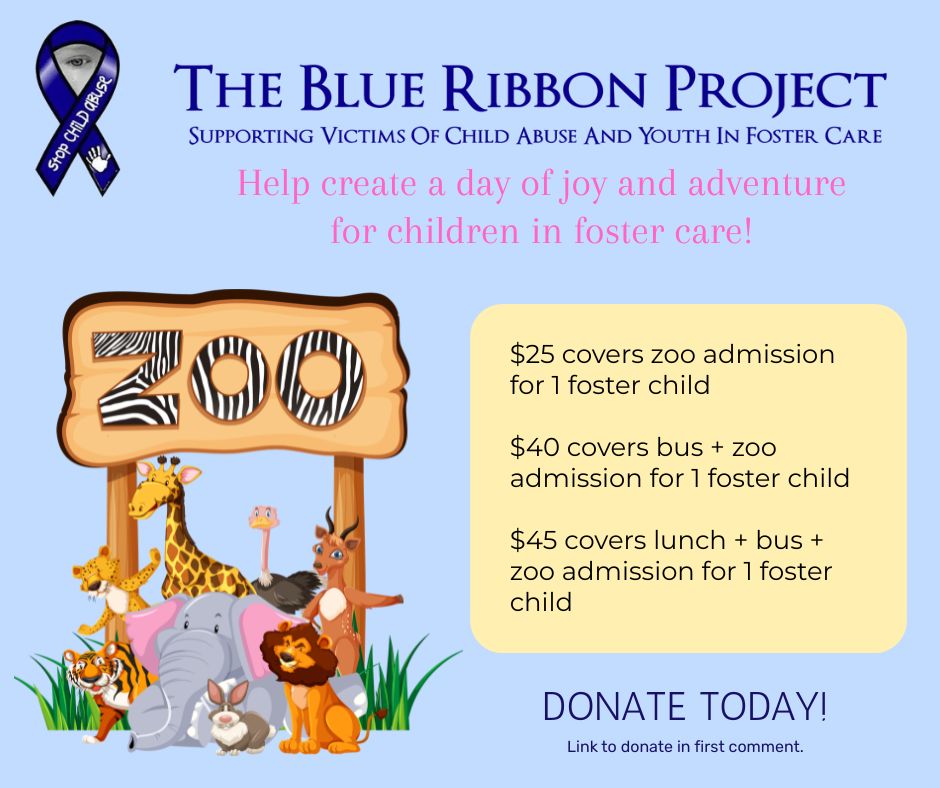
A Day at The Zoo

Every Child Deserves to Feel Seen, Safe, and Supported.

Somewhere in Maryland right now, a child is being placed in Foster Care for the first time — scared, overwhelmed, and carrying nothing but what fits in a bag. When a child enters foster care, they often arrive with nothing — no bag packed, no familiar comforts, no certainty about what comes next. In that moment, your generosity can change everything. You can change what happens next.

The Blue Ribbon Project exists for that child — and for every child in Foster Care, every young person scarred by abuse and neglect, and every teenager aging out of the system with nowhere to turn. Your donation does not just fund programs; it tells a child that someone in this world cares about them.

When you support The Blue Ribbon Project, you make real and immediate differences in the lives of children and youth in Foster Care, victims of child abuse and neglect, and young adults transitioning out of care. Your generosity becomes practical support at the exact moment it is needed most.

Your support puts your values into action:

  • Backpacks of Love ensures that every child entering foster care receives a backpack filled with essential items — so no child arrives empty-handed.
  • Mirah's Closet gives children and youth in foster care a real shopping experience, allowing them to choose brand-new clothing and items just for them — many for the very first time.
  • Foster Friends removes financial barriers to participation in sports, camps, extracurricular activities, and more — because every child deserves a chance to simply be a kid. Birthdays, milestones, and achievements are acknowledged and made special through events and celebrations created just for them. These moments remind each child that their life and accomplishments matter.
  • A Hand to Hold works with older youth as they begin to prepare for life outside of foster care. A Hand to Hold volunteers work as close mentors to reinforce Life Skills to prepare them for life on their own. 

These aren't just programs. They are lifelines.

When you give to The Blue Ribbon Project, you are telling a child that they matter. The Blue Ribbon Project has long been a symbol of child abuse prevention, a reminder that every child deserves protection, love, and a chance at a better future..

Prefer to give by mail? Send a check or money order to: The Blue Ribbon Project | P.O. Box 1736, Edgewater, MD 21037


Read more …A Day at The Zoo

Test Donation Form

Every Child Deserves to Feel Seen, Safe, and Supported.

Somewhere in Maryland right now, a child is being placed in Foster Care for the first time — scared, overwhelmed, and carrying nothing but what fits in a bag. When a child enters foster care, they often arrive with nothing — no bag packed, no familiar comforts, no certainty about what comes next. In that moment, your generosity can change everything. You can change what happens next.

The Blue Ribbon Project exists for that child — and for every child in Foster Care, every young person scarred by abuse and neglect, and every teenager aging out of the system with nowhere to turn. Your donation does not just fund programs; it tells a child that someone in this world cares about them.

When you support The Blue Ribbon Project, you make real and immediate differences in the lives of children and youth in Foster Care, victims of child abuse and neglect, and young adults transitioning out of care. Your generosity becomes practical support at the exact moment it is needed most.

Your support puts your values into action:

  • Backpacks of Love ensures that every child entering foster care receives a backpack filled with essential items — so no child arrives empty-handed.
  • Mirah's Closet gives children and youth in foster care a real shopping experience, allowing them to choose brand-new clothing and items just for them — many for the very first time.
  • Foster Friends removes financial barriers to participation in sports, camps, extracurricular activities, and more — because every child deserves a chance to simply be a kid. Birthdays, milestones, and achievements are acknowledged and made special through events and celebrations created just for them. These moments remind each child that their life and accomplishments matter.
  • A Hand to Hold works with older youth as they begin to prepare for life outside of foster care. A Hand to Hold volunteers work as close mentors to reinforce Life Skills to prepare them for life on their own. 

These aren't just programs. They are lifelines.

When you give to The Blue Ribbon Project, you are telling a child that they matter. The Blue Ribbon Project has long been a symbol of child abuse prevention, a reminder that every child deserves protection, love, and a chance at a better future..

Prefer to give by mail? Send a check or money order to: The Blue Ribbon Project | P.O. Box 1736, Edgewater, MD 21037


Read more …Test Donation Form

Phone

SECTION 1: ORGANIZATION OVERVIEW

Q: What is The Blue Ribbon Project?

A: The Blue Ribbon Project is a volunteer-supported 501(c)(3) nonprofit organization focused on preventing child abuse and neglect and providing critical support to victims of abuse and neglect.

Q: Is The Blue Ribbon Project a government agency?

A: No. We are an independent nonprofit organization.

Q: What is your mission?

A: Our mission is to prevent child abuse and neglect and to provide critical support to victims of abuse and neglect.

Q: Where does The Blue Ribbon Project provide services?

A: We currently serve abused and neglected children, children and youth in foster care, and adult survivors throughout Maryland and beyond. 

Q: Are you expanding to other areas?

Q: Who supports and runs the organization?

A: The Blue Ribbon Project is volunteer-supported and relies on community members who donate time, resources, and expertise.

Q: Do you help adults as well as children?

A: Yes. We provide resources and information for adult survivors dealing with the long-term effects of childhood abuse and childhood trauma. 

Q: What types of resources are available on your website?

A: Our website includes educational articles, prevention information, survivor-focused resources, and details about our programs.

Q: What is your overall approach?

A: We use a community-based approach where survivors, professionals, and supporters work together to address the impact of child abuse and to provide support to children and youth in foster care. 

Q: Why is community involvement important?

A: Community involvement is essential to supporting abused and neglected children and addressing the long-term effects of abuse.


SECTION 2: CONTACT & BASIC INFORMATION

Q: What is your main phone number?

A: You can reach us at 1-800-757-8120.

Q: What is your email address?

A: Our general email is This email address is being protected from spambots. You need JavaScript enabled to view it..

Q: What is your physical address?

A: 45 Community Place, Crownsville, Maryland 21032. (No mail is received at this address.)

Q: What is your mailing address?

A: P.O. Box 1736, Edgewater, Maryland 21037.

Q: What is your EIN or Tax ID?

A: Our EIN is 47-2703698.

Q: Are donations tax-deductible?

A: Yes. We are a 501(c)(3) nonprofit organization, and donations are tax-deductible.

Q: Are you affiliated with the State of Maryland?

A: No. We work with the Department of Social Services but are an independent nonprofit.


SECTION 3: BACKPACKS OF LOVE – PROGRAM OVERVIEW

Q: What is Backpacks of Love?

A: Backpacks of Love provides backpacks filled with essential items to children entering foster care, often during emergency removals.

Q: Why was Backpacks of Love created?

A: The program was inspired by the founder’s personal experience entering foster care without belongings.

Q: What problem does this program address?

A: Children often enter foster care suddenly with very few belongings, sometimes placed in trash bags.

Q: When do children receive the backpacks?

A: Backpacks are delivered at the moment  a child enters care and the placement is happening. It is immediate and not days afterward. 

Q: Who requests a backpack?

A: Typically the Department of Social Services, foster parents, and sometimes law enforcement. 

Q: Where are backpacks delivered?

A: Deliveries may occur at DSS offices, hospitals, foster homes, or other locations. We’ve even met in parking lots on the side of the road. 

Q: How quickly are backpacks delivered?

A: Backpacks are kept ready and are often delivered within a couple of hours of the initial decision that a child has to be removed from and unsafe environment. 

Q: Are backpacks age- and gender-specific?

A: Yes. Each backpack is tailored to the child’s age and gender.

Q: What items are included in a backpack?

A: Hygiene items, clothing, underwear, socks, pajamas, and age-appropriate books and toys.

Q: Are used items allowed?

A: All items must be new. Books may be gently used.

Q: How long are supplies intended to last?

A: Approximately the first 24 to 48 hours in care but will last longer, such as clothing and toiletries can last for months. 

Q: Can community members donate backpacks or items?

A: Yes. Individuals and organizations can donate items or assemble backpacks using provided guidelines. This is something we heavily rely on and your support is needed. 


SECTION 4: BACKPACKS OF LOVE – MASTER PACKING GUIDELINES

GENERAL RULES

• All items must be brand new

• Exception: Books may be gently used

• Clothing should be practical with elastic waistbands preferred

INFANT BACKPACKS (0–18 MONTHS)

Includes diapers, wipes, sleep-and-play outfits, onesies, socks, hat, bottles, pacifier, bib, baby wash, lotion, diaper cream, blanket, and a soft toy.

TODDLER BACKPACKS (18 MONTHS–4 YEARS)

Includes diapers or pull-ups, wipes, outfits, pajamas, socks, underwear, toddler hygiene items, book, stuffed animal, and sippy cup.

SCHOOL AGE BACKPACKS (5–11 YEARS)

Includes outfits, pajamas, socks, underwear, hygiene items, deodorant (ages 9+), book, toy, flashlight or nightlight, and basic school supplies.

TEEN BACKPACKS (12–17 YEARS)

Includes outfits, pajamas, socks, underwear, full-size hygiene items, textured hair products, feminine hygiene items, blanket, flashlight, journal or book, and gift cards.

DO NOT INCLUDE

• Used underwear or socks

• Religious materials

• Sharp objects such as shaving razors. 


SECTION 5: MIRAH’S CLOSET

Q: What is Mirah’s Closet?

A: Mirah’s Closet is a foster closet providing free clothing and essential items to children in foster care. It is essentially a boutique style shopping experience. 

Q: How does it differ from Backpacks of Love?

A: Backpacks of Love supports children at the moment of removal; Mirah’s Closet supports ongoing needs.

Q: Who is Mirah’s Closet named after?

A: It is named in memory of Mirah Chhabra.

Q: Who can shop at Mirah’s Closet?

A: Children in foster or kinship care, foster parents, CASA volunteers, and social workers.

Q: Is there a cost?

A: No. All items are free.

Q: Do I need an appointment?

A: Yes. Visits are by appointment only.

Q: What items are available?

A: Everything that is included in Backspcks of love including clothing, shoes, coats, and school supplies.

Q: Can I volunteer at Mirah’s Closet?

A: Yes. Volunteers help sort donations and organize the closet.


SECTION 6: AGING UP… NOT OUT

Q: What is Aging Up… Not Out?

A: It is a life skills program for youth ages 14–21 in foster care.

Q: What is the goal?

A: To prepare youth for independence and adulthood.

Q: What skills are taught?

A: Financial literacy, cooking, job readiness, housing, and home maintenance.

Q: Is the program free?

A: Yes.

Q: Who teaches the program?

A: Volunteers and professionals with relevant expertise.

Q: How do youth enroll?

A: Through foster parents, CASA’s  or case workers via our website.


SECTION 7: FOSTER FRIENDS

Q: What is the Foster Friends program?

A: It provides funding for extracurricular activities for children in foster care.

Q: What types of activities are covered?

A: Sports, music lessons, dance classes, tutoring,  school trips and supports birthdays and milestones. Also group events such as movie nights, holiday parties, and more. 

Q: Who can request funding?

A: Foster parents or case workers and youth in care. 

Q: Is the program state-funded?

A: No. It is funded entirely by private donations.


SECTION 8: SPEAK UP… SPEAK OUT TRAINING

Q: What is Speak Up… Speak Out?

A: A child abuse awareness and prevention training program.

Q: Who is it for?

A: Adults only, including professionals, parents, and volunteers.

Q: Why is it adults only?

A: The training includes graphic images and realistic discussions.

Q: What topics are covered?

A: Signs of abuse, disclosures, investigations, and mandated reporting laws.

Q: Is the training free?

A: Yes, though donations are welcome.

Q: Do participants receive a certificate?

A: Yes, a certificate of completion is provided upon request. 


SECTION 9: DONATIONS & FINANCIAL SUPPORT

Q: How is The Blue Ribbon Project funded?

A: Through donations, grants, and community support.

Q: Can I donate monthly?

A: Yes, recurring monthly donations are available.

Q: What is the Endowment Fund?

A: A long-term investment fund that helps secure the future of our programs.

Q: Can I donate a vehicle?

A: Yes. We accept many types of vehicles.

Q: Do you accept stock donations?

A: Yes. Please contact us for details.


SECTION 10: IN-KIND DONATIONS & DROP-OFFS

Q: What are in-kind donations?

A: Donations of physical goods rather than money.

Q: What items are most needed?

A: Backpacks, diapers, toiletries, and clothing.

Q: Do you accept used items?

A: Generally no, except gently used books.

Q: Do you have an Amazon Wishlist?

A: Yes.

Q: Where can I drop off donations?

A: At our Crownsville facility or approved partner locations.

Q: Can I host a donation drive?

A: Yes, donation drives are extremely helpful.


SECTION 11: VOLUNTEERING & EVENTS

Q: How can I volunteer?

A: Submit a volunteer application on our website.

Q: What is a Volunteer Day?

A: A group volunteer opportunity for organizations and families.

Q: Do you require background checks?

A: Members of our Leadership Team are required to have a thorough background check.

Q: Can students earn service hours?

A: Yes.

Q: What is the Blue Ribbon Bash?

A: Our annual fundraising gala held each spring.


SECTION 12: REPORTING ABUSE & RESOURCES

Q: What should I do if I suspect child abuse?

A: Contact your local Department of Social Services or law enforcement immediately.

You may also call the Childhelp National Child Abuse Hotline at 1-800-422-4453.

Q: Do you provide crisis intervention?

A: We provide resources and referrals but are not an emergency response agency.