
Maryland Lawmakers Consider Mandatory Child Abuse Training for Childcare Providers After Daycare Abuse Case Shakes Baltimore County
A new bill before the Maryland General Assembly would require all childcare providers in the state to complete specialized, recurring training focused on recognizing, preventing, and reporting child abuse. House Bill 1034, introduced by Delegate Sean Stinnett and co-sponsors in February 2026, was born from one of the most disturbing childcare abuse cases in recent Maryland history — a case that led a daycare owner to shoot her own husband after discovering he had been sexually abusing children in her care. The legislation aims to close a critical gap in Maryland's child protection framework by ensuring that the adults entrusted with the care of children are equipped to identify warning signs and take action.
The Case Behind the Bill
House Bill 1034 did not emerge in a vacuum. Its roots trace directly to a devastating case involving Lil Kidz Kastle Daycare Center in Owings Mills, Maryland, and the abuse perpetrated by James Weems Jr., a retired Baltimore Police officer who worked as the daycare's van driver.
 In July 2022, a parent informed daycare owner Shanteari Young that Weems had been sexually abusing her daughter — a 10-year-old girl who attended the facility. The child disclosed that Weems, whom she called "Mr. James," had shown her pornography on his phone and subjected her to repeated sexual assaults on the bus and at the daycare. According to reporting, the girl said Weems was the only person who was nice to her and would give her snacks, and that he told her not to tell anyone about what happened.
The initial investigation revealed that Weems had been charged with abusing at least three children — boys and girls between the ages of 9 and 11 — who attended the daycare. The FBI later discovered through phone mapping data that Weems had accessed adult websites near elementary schools.
Upon learning of the allegations, Young confronted her then-husband at the Mandarin Oriental Hotel in Washington, D.C., on July 21, 2022, and shot him. Weems survived. Young was arrested and later pleaded guilty to aggravated assault and carrying a pistol without a license in D.C. Superior Court. She was sentenced to four years in prison and two years of supervised release.
Accountability and Sentencing
In November 2024, Weems was found guilty in Baltimore County Circuit Court of second-degree rape, sexual abuse of a minor, and showing obscene matter to a minor. In April 2025, Circuit Judge Michael J. Finifter sentenced Weems to life in prison. During sentencing, the judge stated that Weems had used his background as a retired law enforcement officer to facilitate the abuse, and that his actions and inability to take responsibility "scream out for punishment."
Young testified against her ex-husband during the trial. She was released from federal prison in June 2025 and completed the final portion of her sentence under home confinement. Her ankle monitor was removed on December 17, 2025, formally ending her legal ordeal. During that time, she finalized her divorce from Weems and began the process of rebuilding her life.
From Tragedy to Advocacy
Rather than retreating from public life, Young channeled her experience into advocacy. She began working directly with Delegate Sean Stinnett, a Democrat from Baltimore, to develop legislation that would address what she and others saw as a critical gap in childcare regulation: the absence of mandatory, specialized training on recognizing and reporting child abuse for those working in childcare settings.
 Speaking publicly about her experience, Young has said she has no regrets about her actions, though she has emphasized that she does not encourage others to take a similar path. Instead, she has focused on systemic solutions. In an interview with the Baltimore Banner, she stated that she wants to show people that something catastrophic can happen but that it is possible to rebuild and move forward in a way that helps others.
Young is also planning to launch a nonprofit organization, Opened Umbrellas 4 Lil Kidz LLC, to support children who have experienced sexual abuse and their families, and is writing a book about her experience titled "My Protector."
What House Bill 1034 Would Do
House Bill 1034 would establish mandatory, recurring child abuse awareness training requirements for all individuals who work in licensed or regulated childcare settings in Maryland. The bill amends the Education Article and the Family Law Article of the Maryland Code, creating a new framework that connects childcare provider training directly to the state's existing child abuse reporting infrastructure.
Key Provisions
-
- >
Training Requirement:
-
- Every childcare provider — including employees, contractors, and volunteers — must complete training on the identification, prevention, and reporting of child abuse within six months of their initial date of employment with a childcare entity, and every two years thereafter. >
Free Training Access:
-
- The Maryland Department of Human Services is required to post a free online course on the identification, prevention, and reporting of child abuse on its website, ensuring training is accessible regardless of a provider's financial resources.
Annual Certification:
-
- Beginning July 1, 2027, each childcare entity must certify annually to the Division of Early Childhood Development in the State Department of Education that all providers are in compliance with the training requirements. >
Mandatory Reporter Expansion:
-
- The bill explicitly adds childcare providers to the definition of "educator or human service worker" under Maryland's mandatory reporting statute, reinforcing their legal obligation to report suspected abuse. >
Enforcement:
- Providers who fail to comply face corrective action plans, suspension or termination of employment, or suspension or revocation of their license. Childcare entities that fail to comply face suspension or revocation of their operating license or registration.
If enacted, the bill would take effect on July 1, 2026, with existing providers required to complete the initial training by January 1, 2027.
The Legislative Hearing
On March 4, 2026, Delegate Stinnett presented House Bill 1034 before the House Ways and Means Committee in Annapolis. During his testimony, Stinnett emphasized that abuse is not always physically visible and that childcare workers need to understand the broader spectrum of warning signs.
Ellie Comer, testifying on behalf of SEIU Local 500, expressed strong support for the legislation, noting that the training would rely on a free online course offered by the state — a critical consideration for a workforce she described as "overwhelmingly low paid." Comer emphasized that when expectations are clear and training is accessible, providers are better equipped to act in the best interest of children.
The bill also received conditional support from industry advocates. Christina Peusch, Executive Director of the Maryland State Childcare Association, testified in support of the bill's goals but requested amendments to remove suspension and revocation authority tied to training compliance, preferring corrective action plans as the primary enforcement mechanism. Delegate Stinnett indicated he is open to considering those amendments.
Why This Matters for Maryland's Children
The Lil Kidz Kastle case is a stark reminder that child abuse can occur in settings families trust most. According to federal data, Maryland identified over 6,000 child maltreatment victims in 2023, with sexual abuse accounting for more than 28 percent of confirmed maltreatment types. Children in childcare settings are particularly vulnerable when the adults around them lack the knowledge or tools to recognize warning signs.
Currently, Maryland does not require childcare workers to complete specialized training specifically focused on child abuse recognition and reporting as a standalone, recurring requirement. General training hours may touch on safety topics, but the absence of a dedicated, mandatory training standard means that some providers may enter and remain in the workforce without a clear understanding of how to identify abuse, what constitutes a reportable concern, or how to respond when a child discloses.
House Bill 1034 seeks to change that by creating a clear, enforceable standard that applies to every individual working in a licensed childcare setting — not just owners or lead educators, but every employee, contractor, and volunteer who interacts with children.
The Role of Training in Prevention
Research consistently shows that one of the most effective ways to prevent child abuse — and to intervene early when it occurs — is to equip the adults in children's lives with the knowledge to recognize warning signs and the confidence to act. Child abuse is often hidden. It rarely presents with obvious physical evidence. Instead, it manifests through behavioral changes, emotional withdrawal, age-inappropriate knowledge, regression, and other indicators that trained adults can learn to identify.
Training also plays a critical role in creating environments where children feel safe enough to disclose. When caregivers understand trauma-informed practices and respond appropriately to early signs of distress, children are more likely to speak up — and disclosures are more likely to be handled in ways that protect the child and support the reporting process.
Mandatory training requirements, like those proposed in House Bill 1034, help ensure that this knowledge is not left to chance. By establishing a baseline of competency across all childcare providers, the legislation creates a system-wide safety net that benefits every child in care.
The Blue Ribbon Project's Speak Up…Speak Out Program
The principles behind House Bill 1034 closely align with the work The Blue Ribbon Project has been doing in Maryland communities for years through its Speak Up…Speak Out Child Abuse Awareness Training Program.
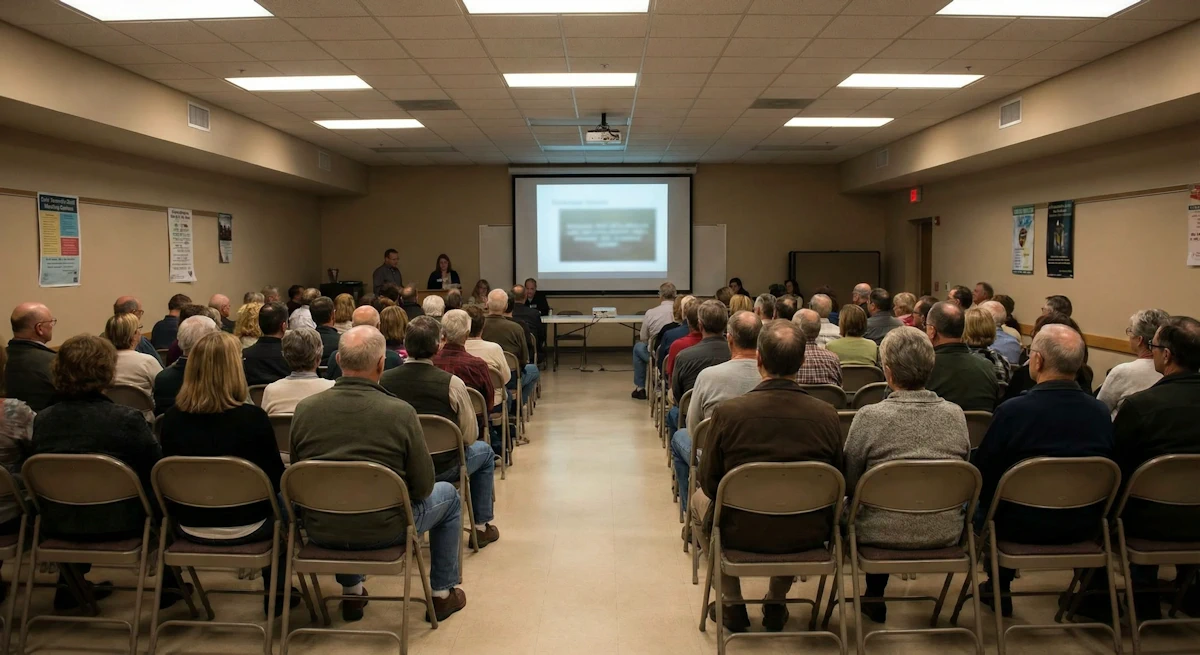 Speak Up…Speak Out is a comprehensive training program designed to educate adults on how to recognize the signs of child abuse and neglect, understand what to do when abuse is suspected, respond appropriately to disclosures, and navigate the mandated reporting process in the State of Maryland. The program covers several types of abuse, provides real-world case studies, and addresses the long-term effects of child abuse and neglect on children and families.
The training is led by Blue Ribbon Project Founder Taylor Pyles, an adult survivor of child abuse and former foster youth, who brings both professional expertise and lived experience to the program. Speak Up…Speak Out has been used in the training of law enforcement officers, firefighters, Court Appointed Special Advocates (CASAs), foster parents, teachers, and other professionals who interact with children.
The program is offered publicly at The Blue Ribbon Project's facility in Crownsville, Maryland, and is also available through virtual private training for agencies and organizations. The Blue Ribbon Project can also bring the training directly to your agency or organization. The program is provided free of charge, and participants receive a certificate upon completion.
For parents, caregivers, foster families, educators, childcare workers, volunteers, and anyone who wants to be better equipped to protect children, Speak Up…Speak Out is a powerful resource. Whether or not House Bill 1034 becomes law, the need for this kind of training exists right now — and The Blue Ribbon Project is ready to help.
To learn more about Speak Up…Speak Out or to schedule a training for your organization, reach out through the Connect With Us form on The Blue Ribbon Project's website.
Looking Ahead
House Bill 1034 is currently before the House Ways and Means Committee following its hearing on March 4, 2026. If the bill advances through committee and passes both chambers of the Maryland General Assembly, it would take effect on July 1, 2026. The bill has support from labor organizations, childcare advocates, and survivors.
The outcome of this legislation will be closely watched by child welfare organizations, early childhood education providers, and families across the state. Regardless of the bill's legislative path, the conversation it has sparked underscores a fundamental truth: protecting children is a shared responsibility, and ensuring that the adults entrusted with their care are trained to recognize and respond to abuse is a necessary step in building a safer Maryland for every child.
Reporting Abuse
If you suspect that a child is being abused or neglected, it is important to report your concerns. In Maryland, reports of suspected child abuse or neglect should be made to the local Department of Social Services or the appropriate law enforcement agency. You do not need to be certain that abuse has occurred to make a report — a reasonable suspicion is enough.
To find the contact information for your local Department of Social Services office, visit the Maryland Department of Human Services website. If a child is in immediate danger, call 911.
You can also contact the Childhelp National Child Abuse Hotline at 1-800-422-4453 (1-800-4-A-CHILD) for guidance, resources, and support.
Sources and Resources
-
- >
Maryland General Assembly — House Bill 1034, 2026 Regular Session
-
- >
-
- >
The Grio — Shanteari Young vows to prevent daycare abuse from happening again (February 2026)
-
- >
People — Retired Police Officer Sentenced to Life in Prison (April 2025)
-
- >
CBS News Baltimore — Retired officer sentenced to life for sexual abuse (April 2025)
-
- >
EURweb — Day Care Owner Freed After Shooting Husband Has No Regrets (March 2026)
-
- >
HHS.gov — Child Welfare Outcomes Data, Maryland
-
- >
Maryland Department of Human Services — Child Protective Services Reporting
-
- >
The Blue Ribbon Project — Speak Up…Speak Out Child Abuse Awareness Training Program